Visiting the Grand Canyon West: One of the World’s Greatest Natural Wonders
- Christianne Klein

- Apr 2
- 6 min read

A visit to the Grand Canyon is one of those experiences that is difficult to fully describe until you are standing on the edge of it yourself. The scale, the silence, the colors, and the sheer age of the landscape make it one of the most powerful natural places in the world.
One of the most accessible areas to visit from Las Vegas is Grand Canyon West, an area owned and operated by the Hualapai Tribe. Visiting here is not just about the views - it’s also about the people, culture, and history tied to this land for centuries.
A Landscape Millions of Years in the Making
The Grand Canyon is estimated to be around 5 to 6 million years old, carved primarily by the Colorado River, though scientists still debate exactly how and when different parts of the canyon formed. Some rock layers visible in the canyon walls are nearly 2 billion years old, making this one of the most geologically significant places on Earth.
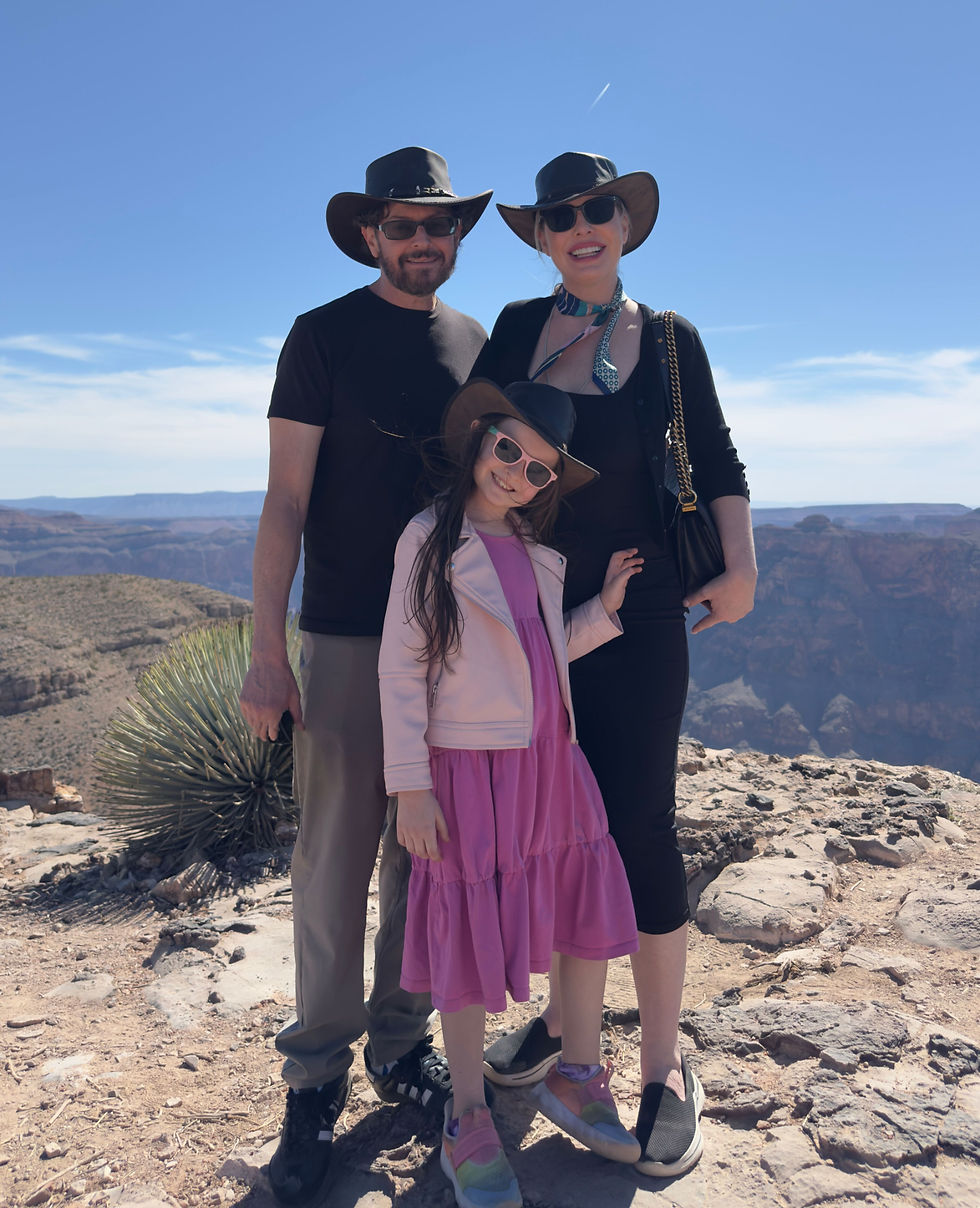
What makes the canyon especially fascinating is the incredible geological diversity. You can see layers of limestone, sandstone, shale, and volcanic rock all exposed in the canyon walls, essentially creating a timeline of Earth’s history in stone.
There are even ancient lava flows in parts of the Grand Canyon region, where volcanic activity thousands of years ago sent lava into the canyon and temporarily dammed the Colorado River. The combination of water, wind, uplift, and volcanic activity helped shape the landscape we see today - and scientists are still learning more about how it all formed.
Wildlife and Natural Diversity
Many people think of the Grand Canyon as just desert, but the ecosystem is incredibly diverse. The region is home to desert bighorn sheep, elk, deer, coyotes, foxes, and hundreds of bird species, including ravens and eagles. Different elevations within the canyon create completely different habitats, from desert plants at the bottom to forests along the rim in other parts of the canyon.
The plant life is just as diverse, ranging from cactus and desert shrubs like globemallow to juniper and pine trees in higher elevations. The Grand Canyon is not just a scenic destination - it’s an entire living ecosystem.
What to See at Grand Canyon West
At Grand Canyon West, two of the main viewpoints are Guano Point and Eagle Point.
Eagle Point is known for its rock formation that resembles an eagle with outstretched wings - you really can’t miss it - and it’s also home to the famous Grand Canyon Skywalk, along with a sit-down restaurant offering beautiful views above the canyon.

The Skywalk is one of the most unique ways to experience the Grand Canyon. The glass bridge extends about 70 feet out over the edge of the canyon, and when you walk out onto it, you are standing roughly 4,000 feet above the canyon floor. Looking straight down through the glass is an incredible experience.
The Skywalk opened in 2007 and was developed by the Hualapai Tribe as a way to bring visitors to their land and create economic opportunity for the tribe. It’s an impressive engineering structure made of steel and multiple layers of thick glass designed to hold far more weight than the number of visitors allowed on it at any given time.
Even if you choose not to walk on the Skywalk itself, the views from the rim at Eagle Point are absolutely spectacular and worth the visit on their own.
See if you can catch the "dog sleeping" to the right and above the eagle's right wing, or the woman with the ponytail in the rock formations. The incredible formations are so strong that once you see them, you'll notice them every time.
Guano Point offers sweeping panoramic views where you can walk out along a ridge and see the canyon in multiple directions.
We ended up having lunch at Guano Point, and it turned out to be one of the most memorable parts of the day. There are outdoor patio tables set along the edge of the canyon, many of them partially shaded, and it’s the kind of place where you sit down for lunch and then realize you can’t stop staring at the view. The canyon stretches out in every direction, and the scale of it is almost hard to process. You can treat it like a quick meal kind of place - but you'll want to sit, relax, look around, and really take in where you are. Enjoy the view if it isn't too crowded. It may be a once-in-a-lifetime location for a meal.
The patio area makes it easy to spend a long time there without feeling rushed, and it’s one of the few places where lunch comes with a truly world-class view. Between the quiet, the breeze, and the layers of rock stretching across the horizon, it felt more like a scenic overlook than a restaurant stop. Just be careful after your meal if you're walking close to the edge, the Grand Canyon draws you in, and you really want to remain at least 5 feet away from the edge at all times.

I also had the chance to try the zipline at Grand Canyon West, which sends you flying over a side canyon - and it was a thrilling experience I honestly didn’t expect. You launch from the top and glide across the canyon with incredible views the entire way. Seeing the landscape from above while moving across it gives you a completely different perspective than standing at the rim. It’s fast, scenic, and one of the most fun ways to experience the canyon from a totally different angle. It's also the only way to experience another stunning viewpoint near the zipline.
There are also cultural demonstrations and exhibits where visitors can learn more about the Hualapai Tribe and their deep connection to the land. When we visited, we watched a traditional bird dance and heard the story of the formation of the Hualapai people - whose name means “People of the Tall Pines.” Their history traces back hundreds of years across this region, long before the canyon became a destination, with their identity and traditions shaped by the land itself, from the canyon floor to the surrounding plateaus. Hearing these stories firsthand adds a powerful layer to the experience. This is not just a natural wonder, but a living cultural landscape and ancestral home to more than 3 thousand surviving members of the tribe.
Plan Ahead for Your Visit
If you’re visiting, especially from Las Vegas, it’s best to leave early in the morning. As in, around 6 am, so you can get there between 8 and 9 am. This helps you avoid crowds, gives you more time to explore, and allows you to experience the canyon during the quieter hours of the day.
Bring plenty of water and hydration - this is the desert, and even when temperatures don’t feel extremely hot, the dry air can dehydrate you quickly. There are food options available at the main stops, but it’s still a good idea to bring snacks, especially if you plan on walking or hiking.
Respect the Canyon
One of the most important things to remember when visiting the Grand Canyon is to respect the landscape. This is one of the most majestic and powerful natural places in the world, and it should be treated that way.
Never leave trash, water bottles, food containers, or anything else behind. If you bring something into the canyon, you bring it out with you. Always. No exceptions.
Places like the Grand Canyon remain beautiful because people protect them. The responsibility to preserve these landscapes belongs to every person who visits. It was honestly upsetting to see empty water bottles along the trails and to watch members of the tribe and other kind visitors picking them up to clean up after people who showed no respect for this natural wonder.
It’s shocking that anyone has to be reminded of this, but it’s simple: if you can’t clean up after yourself, this isn't the place for you. These places are not theme parks - they are some of the most extraordinary natural landscapes on Earth, and they deserve respect.
Standing at the edge of the Grand Canyon has a way of making everything feel very small in the best possible way. The size, the age, the silence, and the natural beauty are a reminder of just how incredible our planet really is.
It’s not just a viewpoint, a park, or a stop on a trip - it’s one of the greatest natural wonders in the world, and it’s something everyone should see at least once.
Christianne Klein is an Emmy® and Edward R. Murrow Award-winning TV Host, journalist, travel and lifestyle expert, and founder of FoodFamilyTravel.com.
For more tips, trends, and inspiration, be sure to follow FoodFamilyTravel.com on MSN and social
Instagram: @food.family.travel
Tiktok: @FoodFamilyTravel