

For centuries, caviar has been wrapped in mystique. Tiny pearls of glistening roe, served with champagne and whispered about in the same breath as yachts and black-tie galas, have earned caviar a reputation as one of the world’s most luxurious foods. But that image tells only a fraction of the story. Caviar’s history is long, surprising, and far more democratic than most people realize – a journey that spans ancient civilizations, royal courts, American saloons (where caviar was served free with beer- yes, free!), and today’s modern kitchen tables.
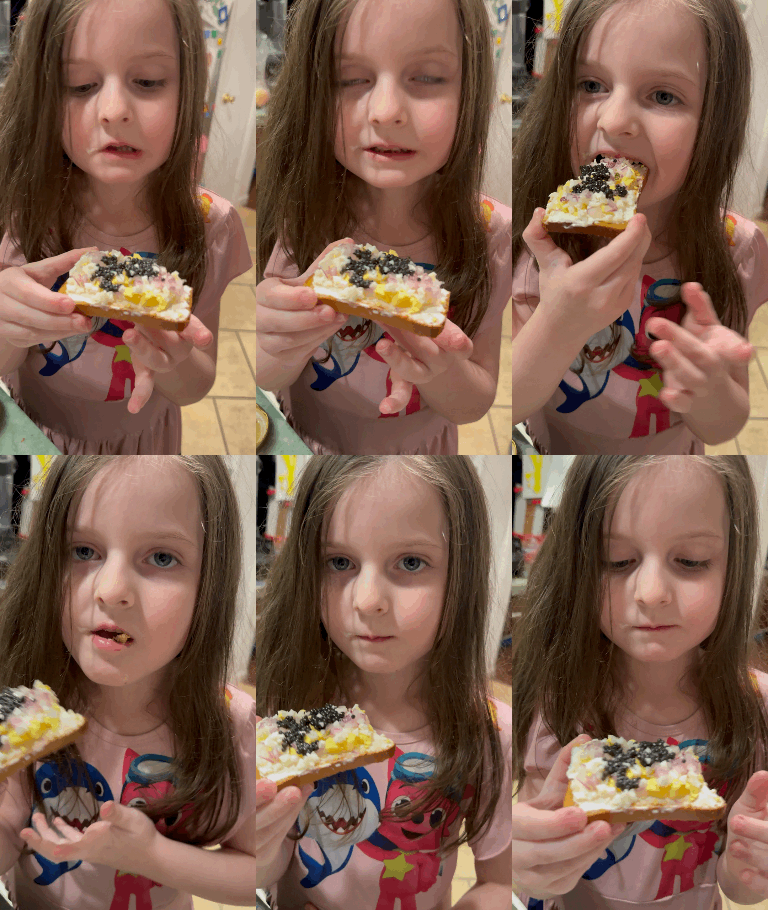
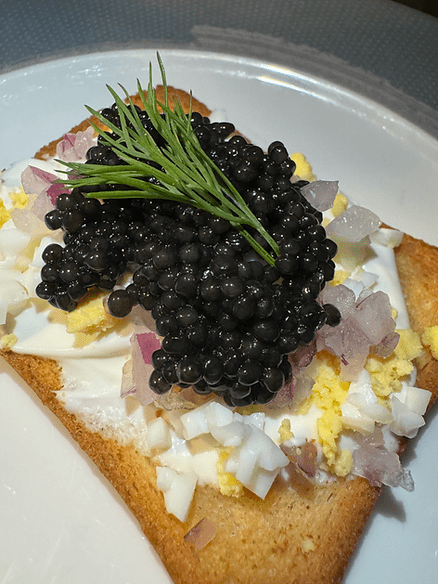
We love it in our house on holidays, birthdays, and really, anytime we want to celebrate (“It’s Tuesday, we LOVE Tuesday! Caviar it is!”). As you can see by Livi’s baby shark nightgown and osetra toast, you don’t have to be at a black tie gala to enjoy this delicacy.
The earliest known appreciation of caviar dates back more than 2,500 years to the regions surrounding the Caspian and Black Seas, where sturgeon flourished. Ancient Persians were among the first to harvest and lightly salt sturgeon roe, believing it provided strength and vitality. The word caviar is widely thought to stem from the Persian khāvyār, meaning “egg-bearing fish,” a reminder that this delicacy began as nourishment rather than status.
The Greeks and Romans quickly followed suit, elevating caviar into ceremonial dining. Historical accounts describe sturgeon roe being presented on platters adorned with flowers and accompanied by music, an early signal that caviar was something to be savored and celebrated. By the Middle Ages, caviar had become deeply embedded in Eastern European and Russian food culture, especially among communities living along major rivers.
It was Russia, however, that cemented caviar’s association with luxury. By the 16th century, sturgeon fisheries were tightly controlled by the Russian tsars, and the finest caviar became a symbol of power and prestige. Royal banquets and diplomatic gifts helped spread the idea that caviar was reserved for the elite, an image that endured for centuries.
Then came one of the most unexpected chapters in caviar history: America.
In the late 1800s, the United States was the world’s leading producer of caviar. Sturgeon were plentiful in American rivers like the Delaware, Hudson, and Mississippi, and caviar was so common it was largely taken for granted. In fact, it was often served free in bars, much like peanuts or pretzels today. The salty roe encouraged patrons to drink more beer, making it a practical business decision rather than a luxury offering. While Europeans prized American caviar, many Americans dismissed it as ordinary.
That abundance came at a cost. By the early 20th century, overfishing, pollution, and industrialization devastated sturgeon populations worldwide. What had once been plentiful became scarce, and governments stepped in to protect endangered species. Wild sturgeon fishing was restricted or banned in many regions, transforming caviar from an everyday food into a rarity almost overnight.
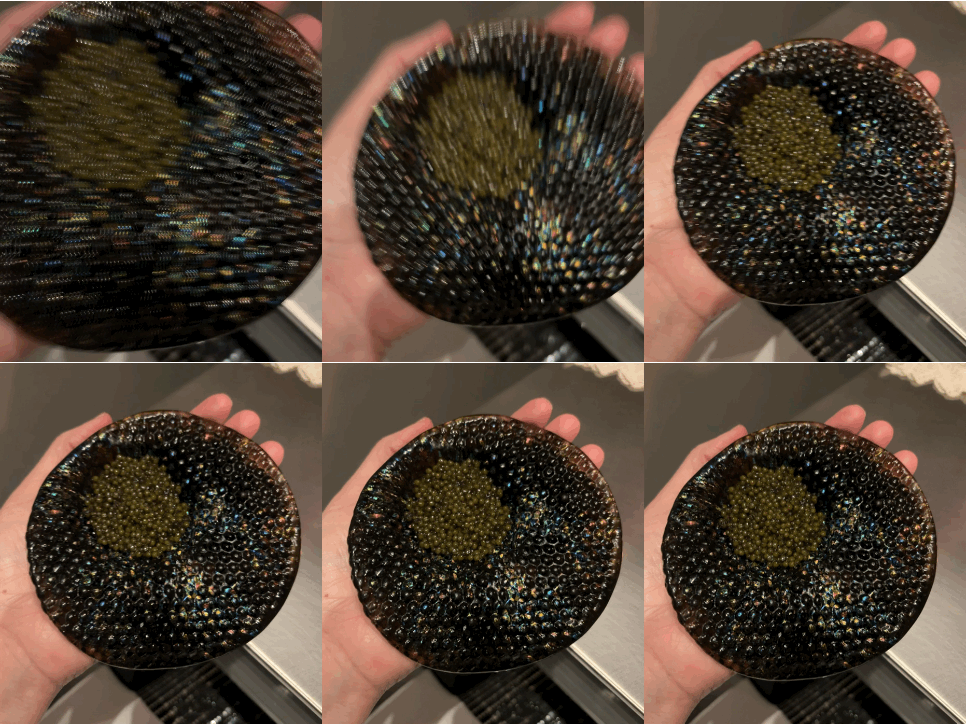
The modern caviar industry is defined by sustainability and innovation. Today, the majority of caviar comes from farmed sturgeon raised in carefully managed environments across Europe, the United States, and Asia. These advancements have preserved sturgeon populations while also reshaping how we think about caviar. No longer limited to a single region or species, today’s caviar market offers an extraordinary range of quality, flavor, and price points.
And this is where caviar’s story becomes especially relevant (and inviting) for modern consumers.
Caviar no longer needs to feel out of reach. While ultra-rare varieties still command high prices, excellent caviar exists at every level, from approachable options perfect for entertaining to premium selections reserved for special occasions. Varieties like osetra, kaluga, hackleback, and paddlefish roe offer distinct flavors and textures, often at far more accessible prices than people expect. Domestic producers in the U.S. are creating exceptional caviar that rivals traditional imports, making quality roe easier to find and fresher than ever.
Just as important, the way we enjoy caviar has evolved. Today’s caviar culture is less about rigid rules and more about pleasure. Yes, it’s still beautiful served traditionally with blinis and crème fraîche – but it’s equally delicious on deviled eggs, potato chips, soft scrambled eggs, or enjoyed simply with a spoon and a glass of sparkling wine (just wait for our incredible caviar dip recipe on CBS on December 30).
Even the viral “caviar bump” has deeper roots than most people realize. Long before it became a modern social media trend, fishermen along the Caspian Sea would place a small amount of caviar on the back of their hand to test its quality. The warmth of the skin allowed the aroma and flavor to bloom, making it easier to judge freshness, texture, and salinity. What looks playful today was once practical – a quick, sensory check used by people who knew caviar best.
That history matters, because it reframes how we think about caviar now. The bump isn’t about showmanship; it’s about tasting caviar in its purest form, without distractions. And it reinforces a broader shift happening in caviar culture: this once-intimidating food is being reclaimed as something to enjoy, not something to fear.
Modern caviar is about confidence, curiosity, and pleasure. Whether you’re savoring a single spoonful, sharing a tin with friends, or trying your first bump, the experience is meant to be approachable. The rules have softened, the table has widened, and caviar has returned to what it has always been at its best, a small indulgence meant to be enjoyed in the moment.
From ancient Persian banquets to American saloons, from royal courts to modern New Year’s Eve gatherings, caviar has always adapted to the moment. Its true luxury isn’t about exclusivity, it’s about savoring something special, however you choose to do it.
Caviar’s long history reminds us that indulgence doesn’t have to be intimidating. It can be celebratory, accessible, and even a little fun. Whether you’re splurging or sampling, pairing it with champagne or a simple cracker, caviar remains what it has always been at its core: a small bite meant to be enjoyed, shared, and remembered.